Loading
Sundarbans
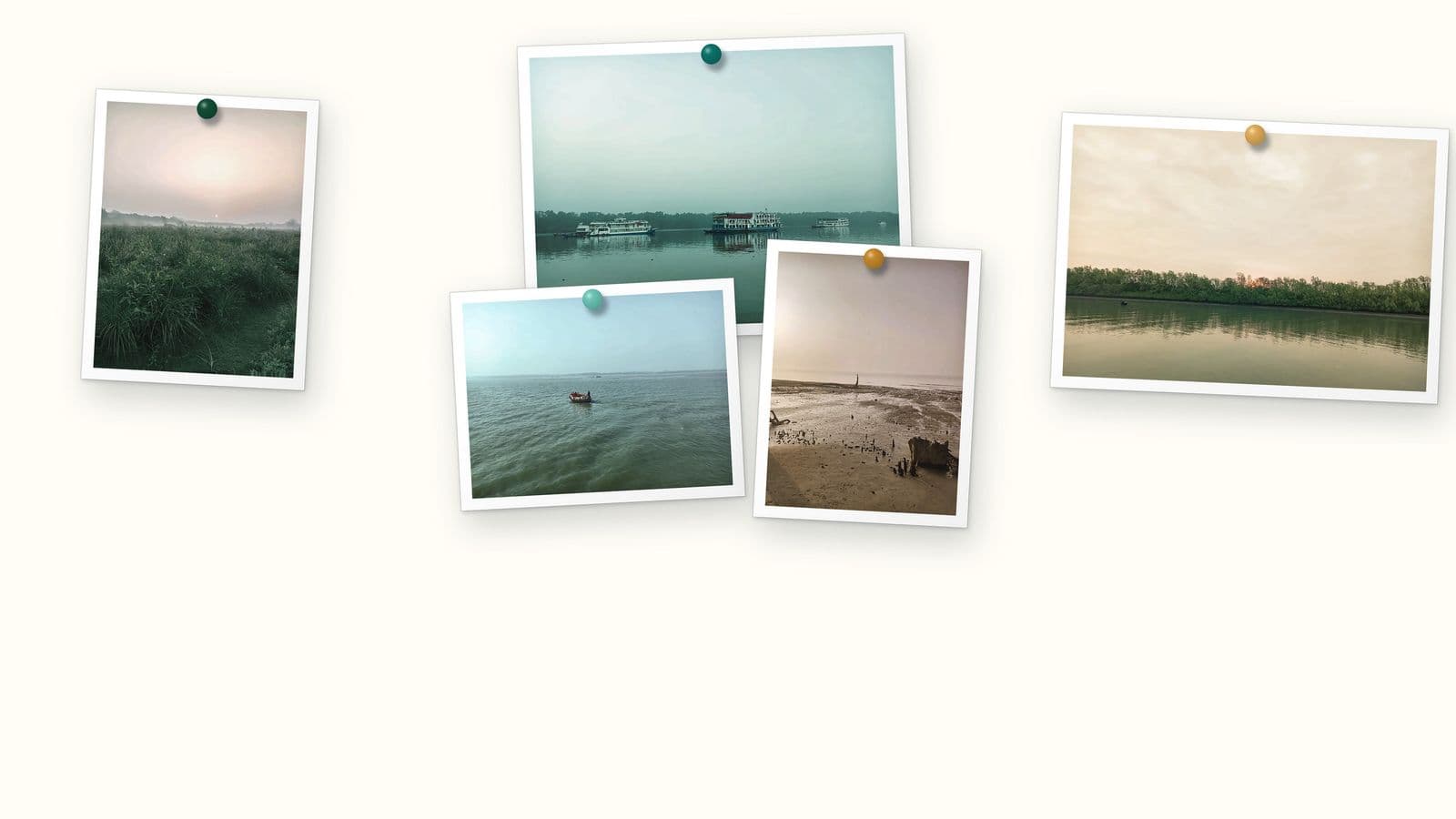
The largest mangrove forest on earth, and the only one with tigers. About 60% of it lies in Bangladesh. You reach it by water from Khulna or Mongla, sleeping on board as the ship moves downriver.
Overview
There is no road into the Sundarbans. The forest is roughly 6,000 square kilometres of tidal channels, mudflats and mangrove on the Bangladesh side, and the only way through it is by boat. That is why a Sundarbans trip is a ship trip: you board at 4 no. Ghat, Khulna or Mongla and for the next two or three days the vessel is your hotel, your restaurant and your viewing platform.
What you see depends on the tide and on luck. Spotted deer and rhesus macaques are common along the channels. Saltwater crocodiles sun themselves on the mud at low tide. Kingfishers, white-bellied sea eagles, herons and egrets are constant. Irrawaddy dolphins surface in the wider rivers. Royal Bengal tigers live here in numbers, but they are seen rarely — most guests come back with pugmarks in the mud rather than a tiger, and that is the honest expectation to travel with.
The usual stops are Karamjal, where there is a boardwalk and a crocodile breeding centre close to Mongla; Harbaria, a short forest walk with a watchtower; Kotka and Kochikhali deeper in the east, where the forest meets the sea and there is open grassland; Jamtoli and its tower; Hiron Point in the west; and Dubla Char, where the winter fish-drying camps run. Which of these a trip covers depends on how many days it is and where it starts. Our itineraries are listed on each tour page.
UNESCO inscribed the Sundarbans as a World Heritage Site in 1997.
How to get there
Every Sundarbans trip of ours starts from 4 no. Ghat, Khulna or Mongla. Get yourself to Khulna and the rest is arranged.
- Dhaka to Khulna by road — about 6 to 7 hours via the Padma Bridge. Non-stop coaches run through the day and overnight.
- Dhaka to Khulna by train — the Sundarban Express and the Chitra Express run daily from Kamalapur; roughly 8 to 9 hours. Book a few days ahead in season.
- By air — fly Dhaka to Jashore (about 45 minutes), then a little under 2 hours by road to Khulna.
- Khulna to Mongla — about 1.5 hours by road.
Tell us your arrival time when you enquire and we will tell you exactly where and when to be at the boarding point. We arrange pick-up from Khulna city with any cost.]
Questions
How many days do you need for the Sundarbans?
Three days and two nights is the common length from Khulna, and it reaches Kotka and Kochikhali. Shorter one-day trips only reach Karamjal and Harbaria near Mongla, which is the edge of the forest rather than the forest. See our tours for the current itineraries.